
Menu
Back
Articles
27 March 2026

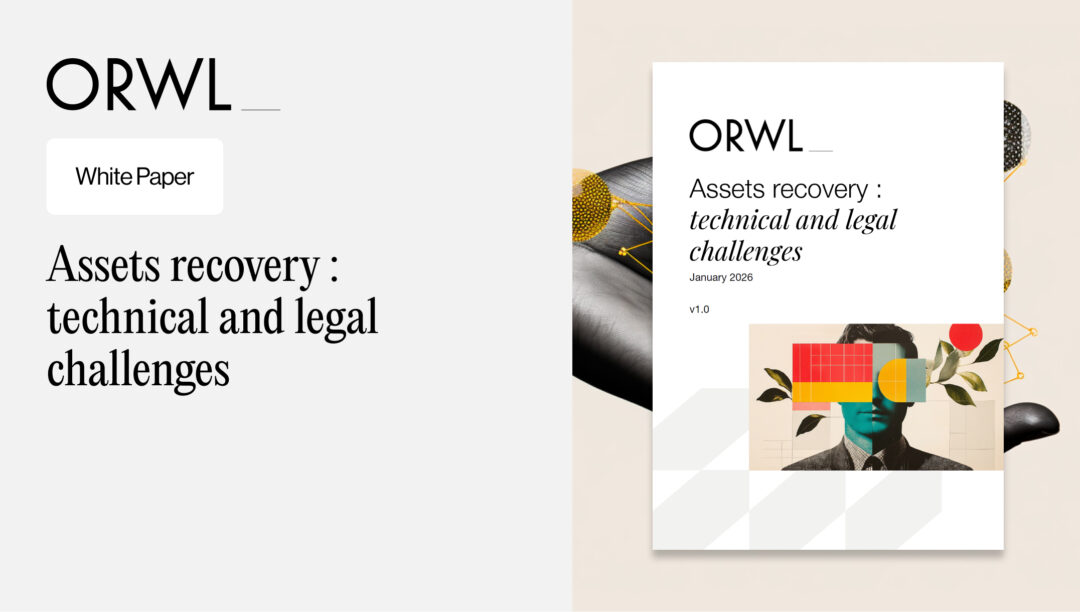
[White Paper] Assets recovery

The holding of crypto-assets has become widespread in France, driven by growing enthusiasm for digital investment. However, this has led to a multiplication of litigious situations involving crypto-assets (fraud, hacks, organized insolvency, investment scams, etc.). This white paper, published by ORWL, presents the essential solutions for asset recovery in the Web3 context.

While the transparency of blockchains may suggest that seizure is more straightforward, the reality is far more nuanced. Volatility, the diversity of custody methods, and the speed at which transfers can be executed significantly complicate recovery efforts. Therefore, crypto-assets, which are by nature mobile and cross-border, require a comprehensive and coordinated strategy based on technical prerequisites, judicial procedures, and essential partners.

This guide analyzes the technical and legal challenges, identifies the tools that can be mobilized, and illustrates—through use cases drawn from ORWL’s practical experience—how its multidisciplinary and strategic approach makes it possible, beyond mere compliance, to achieve effective control over crypto-asset recovery in a constantly evolving digital landscape.

Extracts

Download our whitepaper


This white paper addresses, in particular:

  • The challenges of asset recovery in the crypto and digital context
  • Applicable national and international legal frameworks
  • The main technical vectors
  • On-chain investigation methods
  • Legal remedies and recovery procedures
  • Case studies and feedback from experience

Since 2018, ORWL has been the French leader in supporting Web3 and crypto projects.

The firm stands out for its recognized experience, in-depth understanding of the sector’s challenges, and multidisciplinary approach.

The complementary nature of its teams enables the firm to advise companies and individuals on securing their Web3 projects and optimizing their tax situation with a global vision. The firm is also able to represent them in any disputes that may arise from their activities.

Contact us

Frequently Asked Questions

Asset recovery refers to all legal, technical, and operational mechanisms used to identify, secure, and recover assets that have been lost, misappropriated, or fraudulently transferred—particularly in a digital and crypto-asset environment.

In the event of a loss of crypto-assets (fraud, hacking, handling error, service provider failure), it is essential to act quickly and in a structured manner.

The first steps include (i) (i) precisely identifying the nature of the loss and locating the assets, (ii) preserving all available evidence (transactions, addresses, screenshots, communications, contracts); (iii) assessing the legal levers that can be mobilized.

This white paper details best practices to adopt, mistakes to avoid, and potential recovery options depending on the nature of the assets and the applicable legal framework.

Recovery of crypto-assets is never automatic, but it is sometimes possible depending on the circumstances: the nature of the loss, speed of response, traceability of flows, and identification of regulated intermediaries or conversion points into traditional assets.

Certain actions (reporting, freezing, seizure, legal proceedings) are subject to legal or practical deadlines. The sooner action is taken, the greater the chances of preserving or recovering the assets.

Transactions are technically irreversible, but this does not preclude all forms of action. Measures may target intermediaries, exit points (exchanges, service providers), or identified holders, based on on-chain and off-chain evidence.

Regulated platforms may, under certain conditions, be required to respond to legal requests or court orders, including when they are located outside the European Union.

On-chain investigation relies on the analysis of blockchain transactions and addresses.

Off-chain investigation consists of identifying the individuals, entities, or services linked to those addresses (KYC data, contractual information, communications, traditional financial flows).

Our latest posts
Mise en conformité DAC8 pour les PSCA : guide pratique
Articles
22 March 2026
DAC8 Compliance for Crypto-Asset Service Providers (CASPs)
Automatic Exchange of Information on Crypto-Assets
Reports
22 March 2026
[White Paper] Automatic Exchange of Information on Crypto-Assets
L’ACPR précise les conditions de l’agrément allégé pour les PSCA offrant des services sur EMT
Articles
20 February 2026
ACPR clarifies conditions for simplified authorisation for CASPs offering services on EMTs