![[Doctrine] The Cryptoasset Challenge: Identifying Transactions and Applying VAT (Tax Notes International)](https://www.orwl.fr/wp-content/uploads/zazeez-1080x612.jpg)
[Doctrine] The Cryptoasset Challenge: Identifying Transactions and Applying VAT (Tax Notes International)

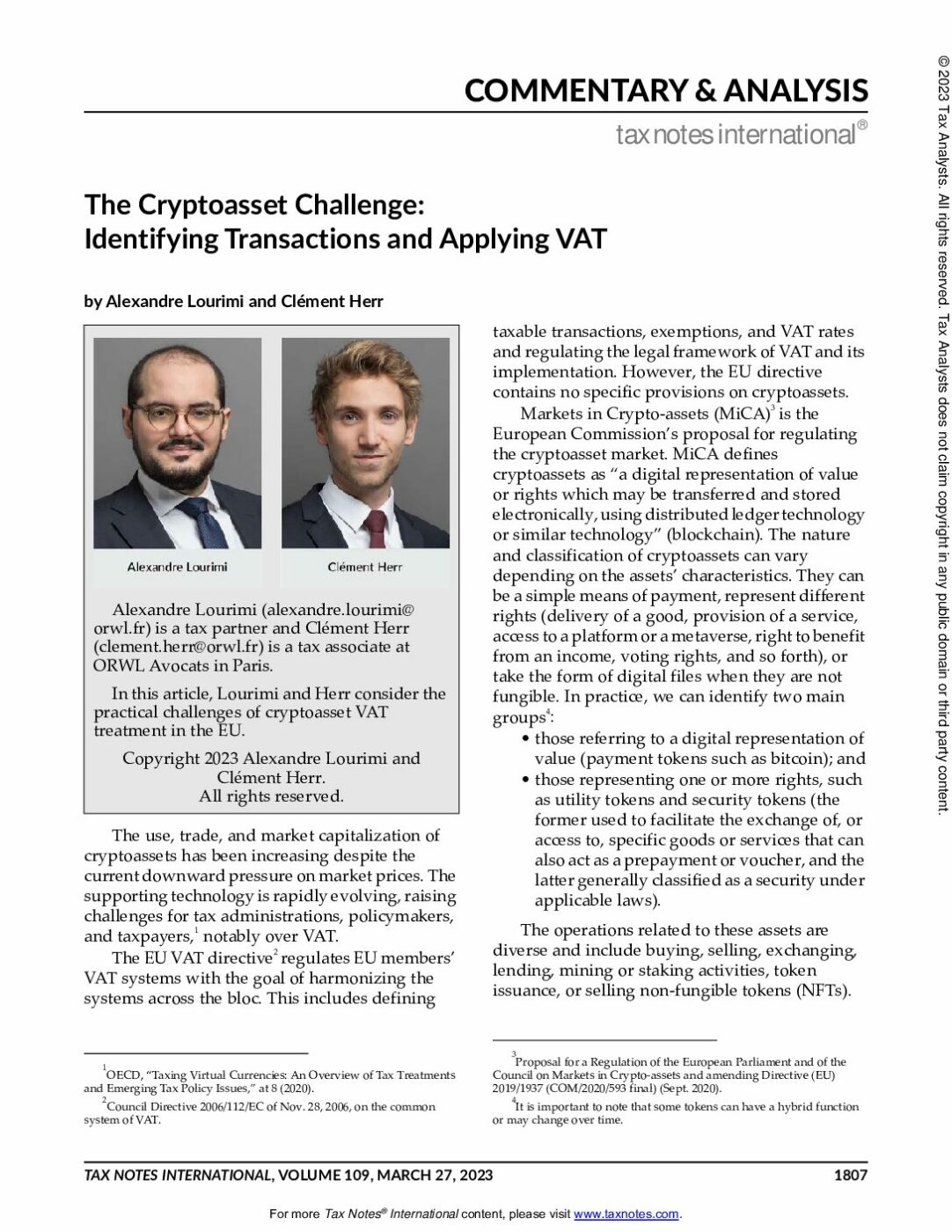
As the adoption of crypto-assets continues to accelerate, their tax treatment remains a paramount challenge for enterprises and tax authorities across Europe. In a seminal article published in Tax Notes International, Alexandre Lourimi (Partner) and Clément Herr (Associate) analyze the complexities of applying VAT to this rapidly evolving sector.
While the VAT Directive harmonizes national systems, it contains no specific provisions regarding crypto-assets. This lack of clear guidance creates legal uncertainty, even as new asset classes, such as NFTs or stablecoins, emerge at pace.
Key insights from the analysis:
-
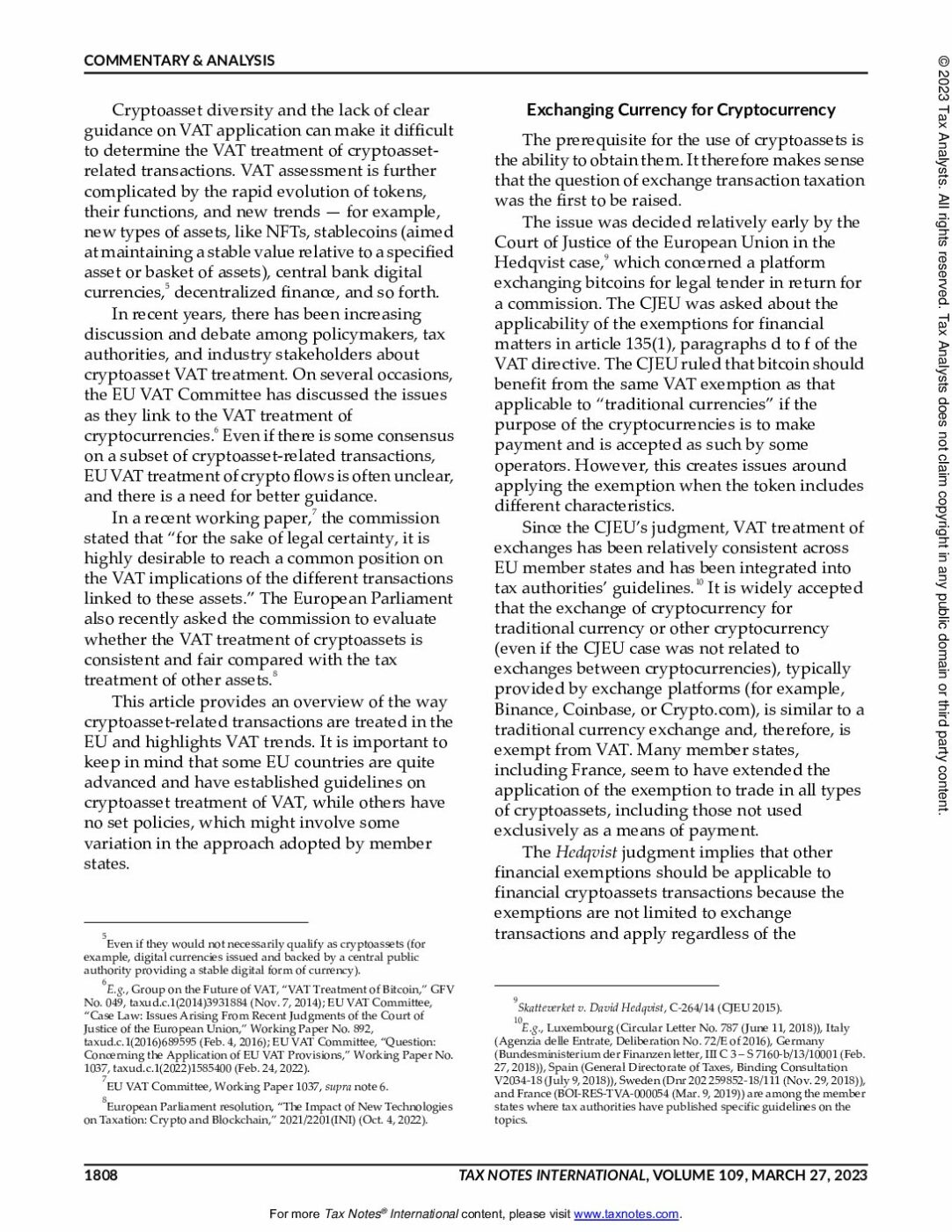
Exchanges and Virtual Currencies: Since the CJEU Hedqvist ruling, it is widely established that the exchange of cryptocurrencies for fiat currencies is VAT-exempt, consistent with the treatment of traditional legal tender.
-
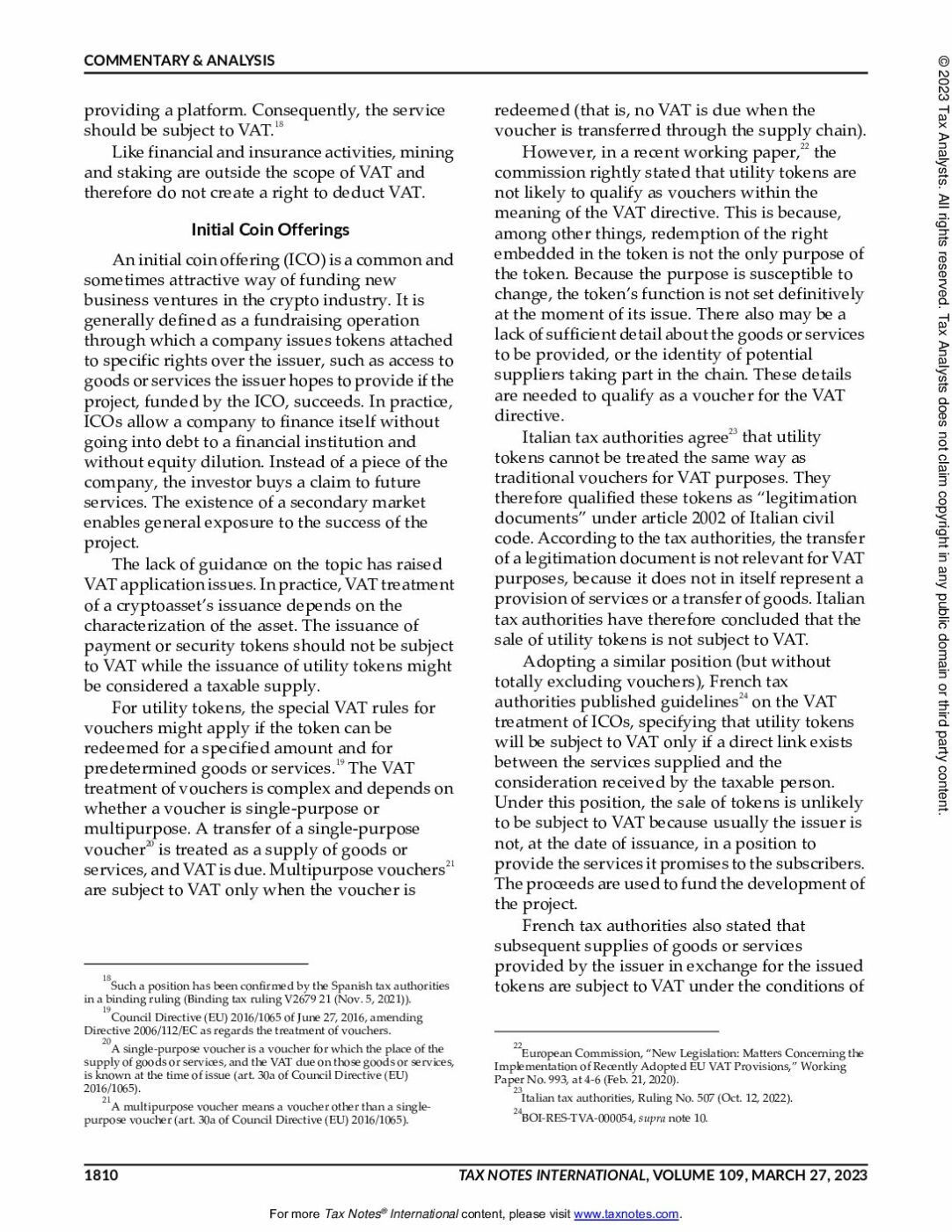
The Complexity of ICOs (Initial Coin Offerings): The tax treatment is contingent upon the nature of the token. While payment or security tokens are generally out of scope, utility tokens raise significant questions. In France, they are subject to VAT only where a direct link exists between the service provided and the consideration received.
-
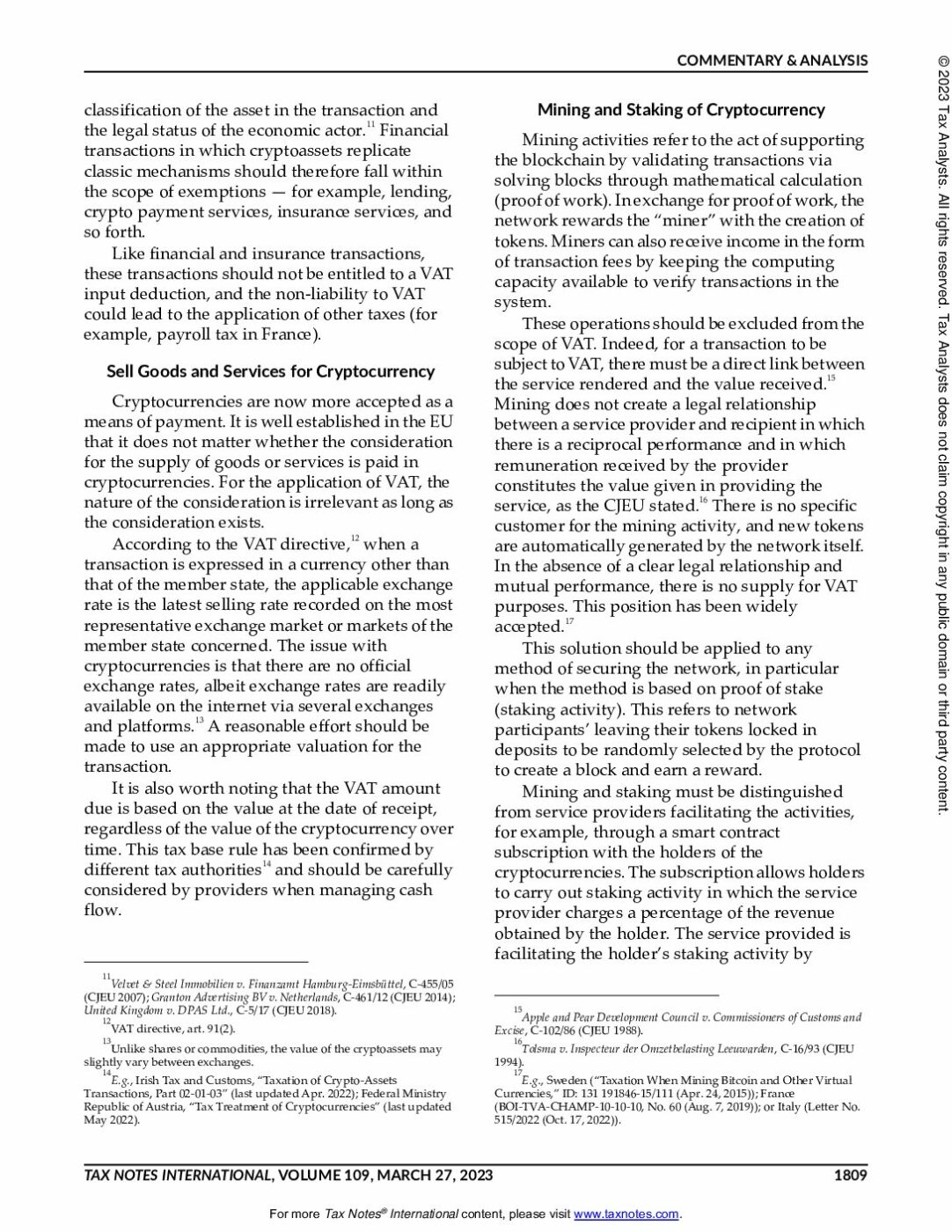
Mining and Staking: These network securing activities are deemed to be outside the scope of VAT as there is no direct legal relationship between a service provider and a specific client, with rewards being generated automatically by the protocol.
-
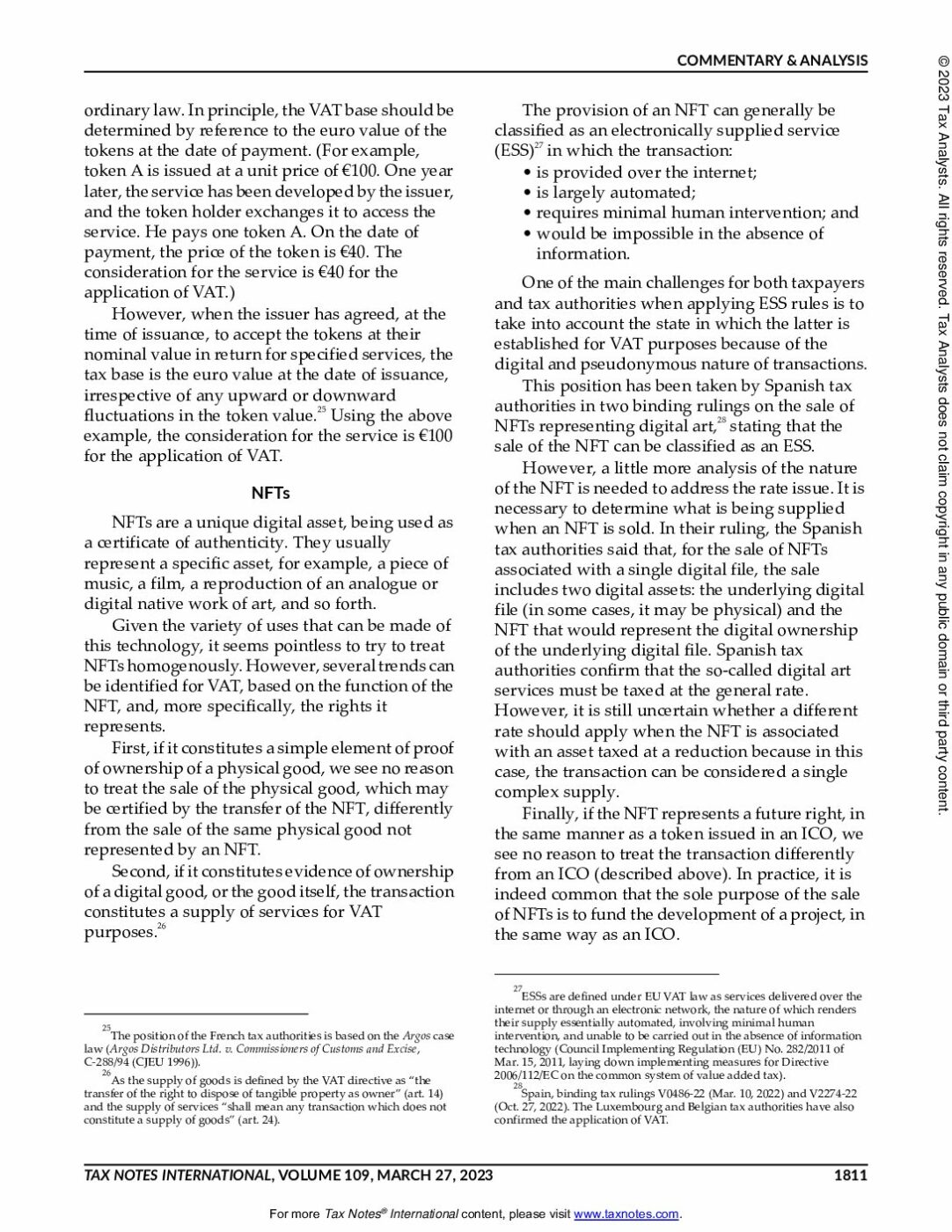
The Rise of NFTs: For VAT purposes, the classification depends on the NFT’s function. If it represents a digital good, it is often characterized as an Electronically Supplied Service (ESS), implying a high degree of automation and minimal human intervention.
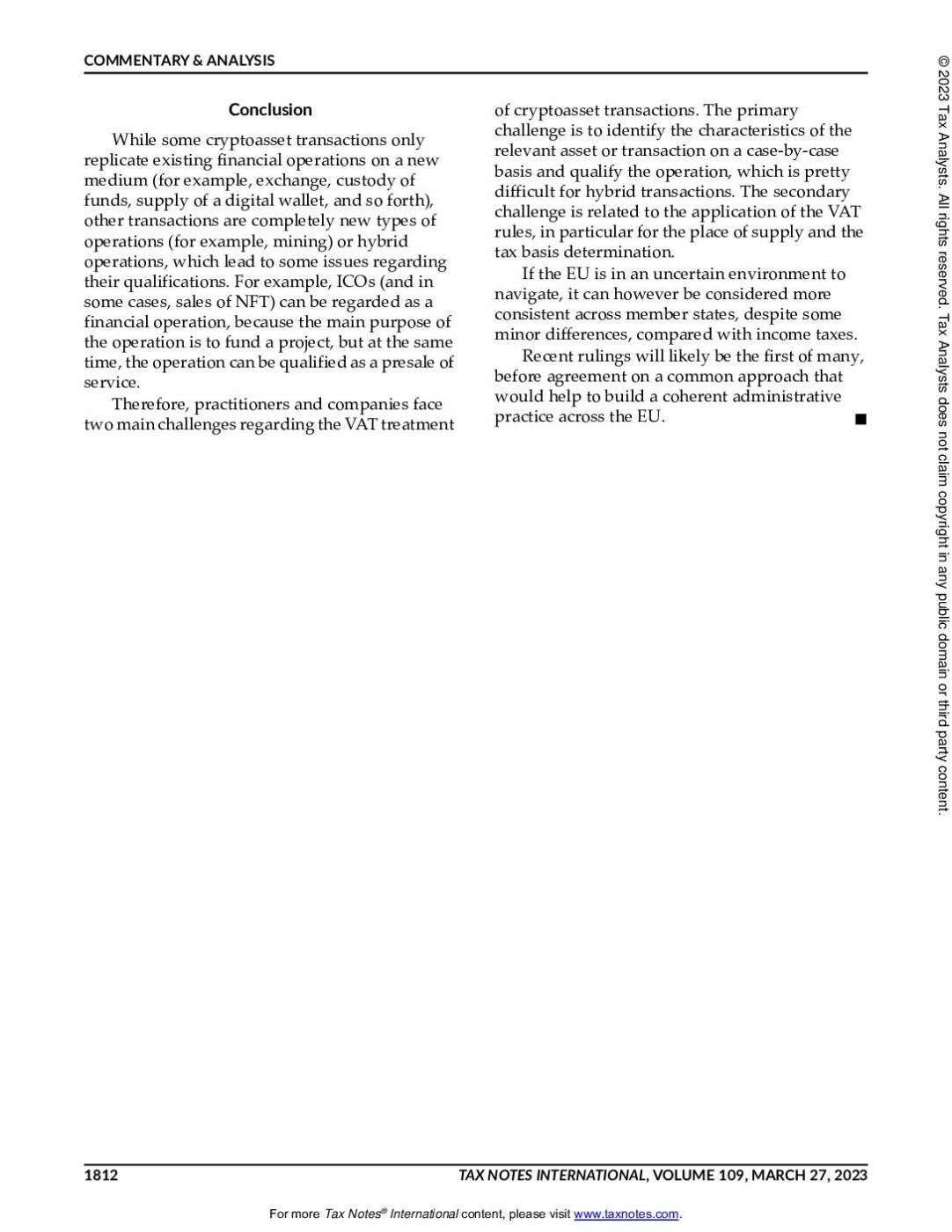
According to the authors, businesses face two primary hurdles:
- Asset Characterization: Determining whether a transaction is purely financial or constitutes a pre-sale of services, particularly in the case of hybrid operations.
- Regulatory Application: Determining the place of supply and the exact taxable base, which is particularly complex within a pseudonymous environment.
Although the environment remains uncertain, a convergence of administrative practices is beginning to materialize across the EU. Specialized, case-by-case expertise remains indispensable for navigating these regulatory waters.
Read the article